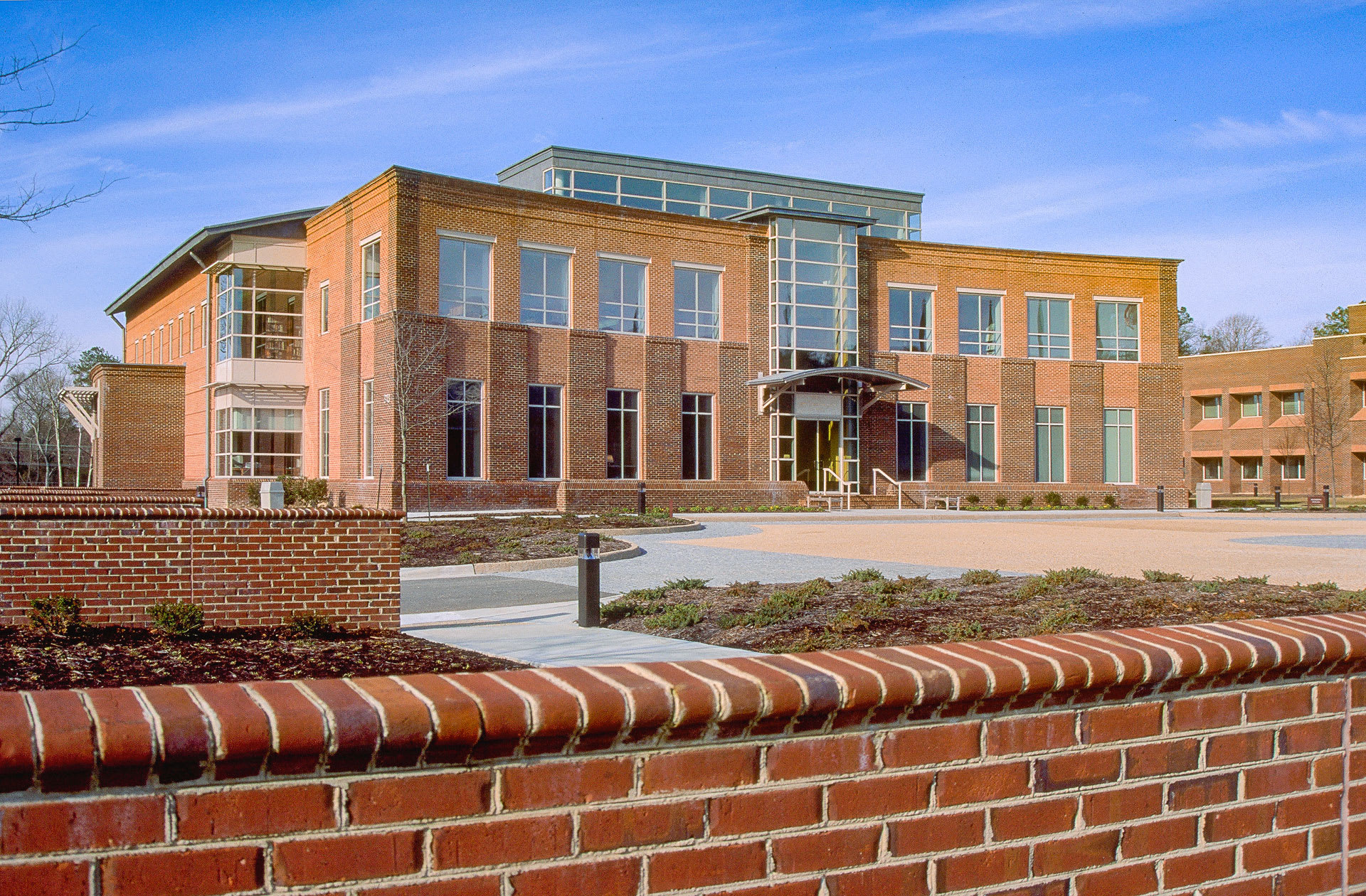
Bush Hill House
Bush Hill House, Barbados: Excavation of a Home Formerly Used by George and Lawrence
Washington
by Anna Agbe-Davies
The Barbados National Trust has long held an interest in acquiring Bush Hill—
the house rented by George and Lawrence Washington for a three-month stay in 1751—to
use as museum and research center. Michael Chandler, Barbados’ first government archivist,
and P. F. Campbell, historian and former editor of the Journal for the Barbados Museum
and Historical Society, demonstrated that this site is that which the Washington
brothers rented, and not a Bay Street house that has claimed the
distinction since the 1890s.
Through the Trust’s lobbying efforts, in July 1999 the Barbadian Government agreed
to compulsorily acquire Bush Hill from the Barbados Light and Power Company. Once the
deal is closed, the Government intends to turn the site over to the Barbados National
Trust for restoration to open it for public tours.
Using a generous Government gift, the Trust hired a team of architects, architectural
historians, archaeologists, and students to study the site and make recommendations
for its restoration, interpretation and long-term care. Penny Hynam Roach, executive
director for the Trust, and Karl Watson, chairman of Bush Hill House Committee,
contacted William Tilson, director of the University of Florida Preservation Institute:
Caribbean, and Marley Brown III, director of the Department of Archaeological Research,
Colonial Williamsburg Foundation, to assemble a team for this study. The Trust hired
Susan Bain as project director, and on-site work began in earnest on the first
of September, 1999.
The Barbados National Trust intends to restore the house and grounds as a museum to
celebrate Washington’s sojourn here and to further Barbados-United States relations.
An interpretive center is planned, focusing on the role Barbados played in the
seventeenth and eighteenth centuries as a point of cultural an economic diffusion
for the New World. To further this goal, a genealogical center is proposed that
includes a database to assist visitors in tracing their roots to the island.
Our work is intended as a foundation for planning that will be necessary to
bring about these goals (BNT 1997). We were charged with four tasks on this project.
First, we were asked to assess the archaeological potential of the property.
Questions that we addressed include the condition and extent of below-ground features,
general dates of major deposits or disturbances on the property, spatial arrangement
of past activites at the site, and evidence that would assist in dating the present
structures on the property and any changes to them. Although a first-phase project
such as this could not be expected to provide a comprehensive view of how the site
appeared and how it changed over time, we were successful in addressing
many of these questions and laid the groundwork for a more extensive excavation.
Second, an architectural analysis focused on the main house to better understand
the nature of its development. First was the need to determine whether any portion
of the dwelling that the Washington brothers rented survives as the core of the
present building. Secondly, we were asked to develop a chronology for the
structure’s development. These two portions of the project required the removal
of selected areas of modern plaster, stucco and flooring to look at the building’s core. A
third requirement was to create a catalog of architectural features
surviving throughout the house.
Third, the Florida team was charged with producing a set of measured drawings for
the house and kitchen to document the building in its present condition. They were able
to measure some of the outbuildings in addition to the mansion and have turned their
fieldnotes into finished AutoCAD drawings.
Documentary research is critical to a project of this nature. Although we did not
contract to work in the archives or write a historical narrative of the property,
we did feel compelled to assemble the information that was readily available.
Finally, we were asked to plan this project and present our findings in a manner
that could be used as an appropriate prototype for similar undertakings in the future.
Archaeological excavations took place over a three-week period under the supervision
of project archaeologist Anna Agbe-Davies. Field technicians Carrie Alblinger,
David Brown and Andrew Butts formed the field crew. Assistant curator for archaeological
collections Kelly Ladd conducted the laboratory work. Carrie Alblinger drafted site plans and historic
maps. All work was performed under the general supervision of Marley R. Brown, III.
Investigations of the house were undertaken by Colonial Williamsburg architectural
historians Edward Chappell, director of Architectural Research, Willie Graham, curator
of architecture, and Cary Carson, vice president of Research.
William Tilson and Herschel Shepard of the University of Florida assembled a team of
architects and architectural students to undertake measured drawings. Team members
include Steven VanDessell and Partha Ajgoankar, doctoral students in the architectural program.
Anna Agbe-Davies was formerly project archaeologist in the
Department of Archaeological Research. This paper was written in 2001.
|