Colonial Williamsburg Research Division Web Site

Slavery in John Blair's Public and Personal Lives in 1751

Slavery in John Blair's Public and Personal Lives in 1751

by Julie Richter

John Blair purchased a copy of The Virginia Almanack, for the Year of Our Lord God 1751 from William Hunter in the fall of 1750. Blair used the 6" by 4" almanac as his diary in 1751. It is a document that provides details about daily events in the life of one of the leading families of Williamsburg and the colony. He included information about slavery in each of the three sections of his diary.1 Blair's notations reveal that the institution of slavery was part of his private and public lives as a citizen of Williamsburg, a lawyer, and a member of the Virginia Council. This article focuses on Blair's comments in the diary on Williamsburg merchants' involvement in the overseas slave trade, interactions with household and James City County plantation slaves, and legal matters that involved enslaved laborers.

Blair first mentioned the overseas slave trade on March 3 when he noted "Sad news from coast of Africa; a ship burnt,& c., and great mortality amg the slaves of another."2 Two months later, on May 16, Blair noted "Negroe Ship arrivd." He might have learned about the arrival of the ship, the Tryal, from the May 16 issue of the Virginia Gazette. Hunter's paper reported "Last Night arriv'd in York River the Tryal, Capt. Abraham Saunders, from Angola, with near 400 Slaves, consign'd to Messrs. [Philip] Rootes and [Humphrey] Hill. 'Tis said she has buried very few, and that they are all exceeding healthy."3

On July 26, Blair noted that "Capt. Tate arrivd last night, we hear, with near 300 slaves." John Tate was the master of a ship named Williamsburg, built in Bristol, England, in 1735. John King and Company owned the ship and the 295 Africans transported across the Atlantic on the vessel. John King consigned the Africans to Walter King, a Williamsburg merchant.4 Blair knew all three men because they and their other mercantile partners John Harmer and John Lidderdale imported slaves into Virginia for a dozen years, from 1739 to 1752. The councillor developed personal ties to Harmer and Walter King who, like Blair, held political offices in Williamsburg. Harmer was mayor of Williamsburg in 1738 and 1746, a churchwarden for Bruton Parish Church, and Burgess for Williamsburg from 1742 to 1747. Walter King was one of Williamsburg's aldermen in 1746.


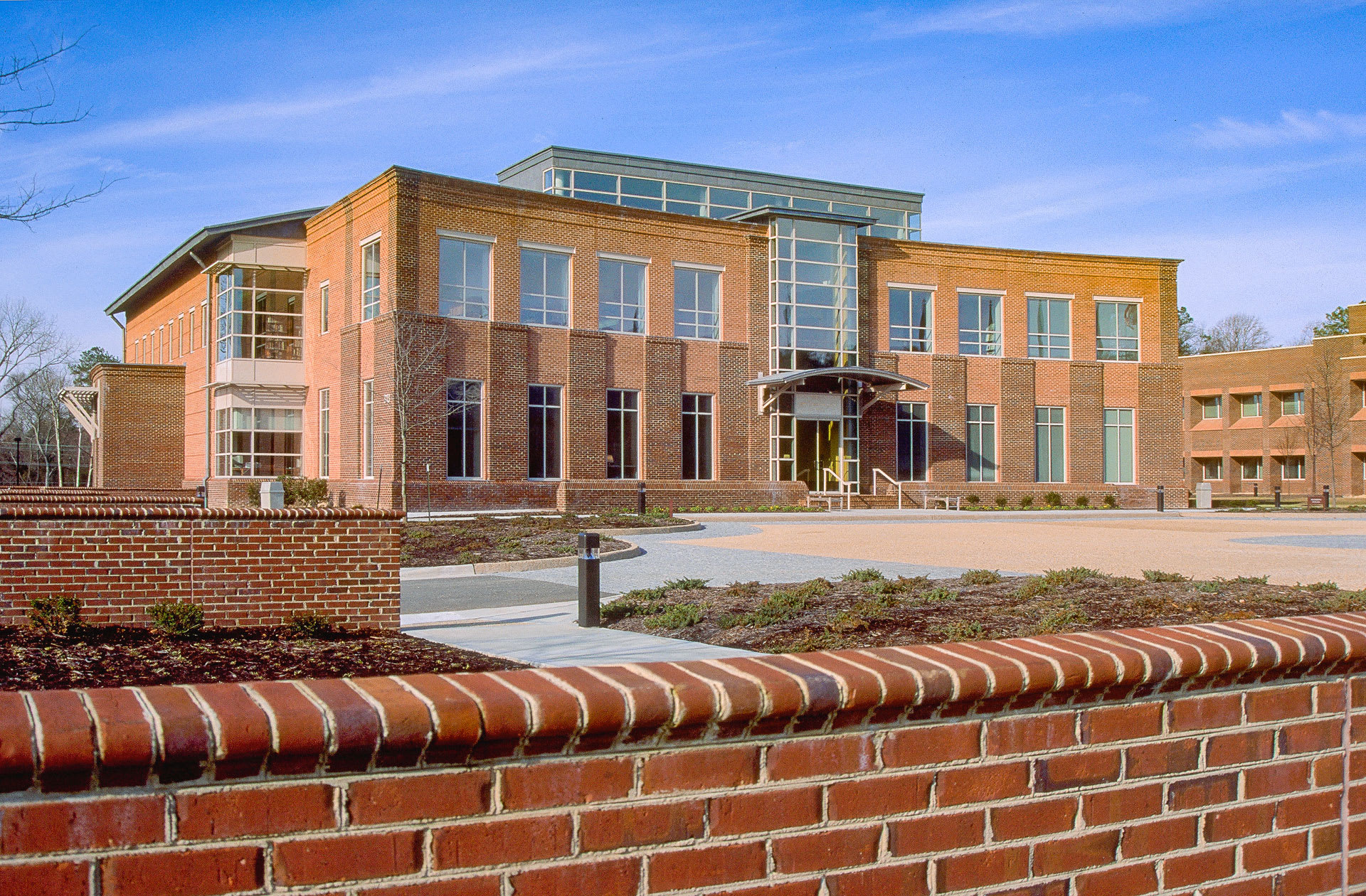
John Blair House

John Blair probably met Walter King soon after King arrived in Virginia from his native Bristol, England, in 1723. King was in partnership with several Bristol merchants, including John King (probably a kinsman), and he journeyed to Virginia to manage the iron works in Sittenbourn Parish, King George County. Walter King was a resident of Williamsburg by May 1735 when he and his partner, John Harmer (who arrived in Virginia from Bristol in 1733), purchased part of Lot 52 on Duke of Gloucester Street from Samuel Cobbs. Harmer and King also bought five lots at Queen Mary's Port in September 1736.

Harmer and King used their ties to other Bristol merchants to gain possession of Africans imported into Virginia. On June 1, 1739, the partners announced:

THE Crosse-Galley, Cast. Joseph Pitman, Master, lately arriv'd from Africa, with a choice Cargo of Slaves. The Sale whereof will begin on Monday the 4th Instant, at West-Point. And assoon as discharg'd, will ,prepare to receive a Freight for Bristol. She is a Bristol built Vessel, not above Seven Years old, and shall be well fitted, to carry what Tobacco may be but on Board her. The Subscribers will ship upwards of 100 Hogsheads, and has already 50 more engag'd: And will be thankful to any Gentlemen for their kind Assistance. She shall sail with all possible Expedition, as Mr. King intends to go home in her: Harmer and King.5

John King still owned the Williamsburg when it arrived in Yorktown from Guinea on July 28, 1740, with 230 Africans. Captain Jonathan Lambert consigned the slaves to John Harmer and Walter King who sold all but one of the Africans before the ship left the York River for Bristol on October 20 of that year. 6 Blair, a justice of the peace for York County between 1724 and 1745, might have witnessed the arrival of slave ships and the sale of Africans when he attended the monthly meeting of the county court in Yorktown.

The Williamsburg arrived again at Yorktown on June 13, 1743 carrying 300 Africans. Harmer and King sold half of the Africans at the waterfront. On June 24, Tate took the Williamsburg to the Upper James to sell the remaining 150 Africans. In December of the same year, John Harmer's vessel, a schooner named Sarah, arrived in Yorktown from Barbados. The fate of the only two Africans on board is unknown. By 1745, Walter King owned the snow Broomfield, which arrived in Yorktown in August from Africa with a cargo of 187 Africans.7

John Harmer and Walter King entered into a partnership with another Williamsburg merchant, John Lidderdale, in early 1746.8 The three partners gained possession of the 250 Africans who arrived in Yorktown from Gambia on the ship Gildart on July 21, 1746. The owner, Richard Gildart, was a resident of Liverpool. Lidderdale, Harmer, and King announced a sale of these slaves in the July 31, 1746, issue of the Virginia Gazette:

ARRIVD from Gambia, the Ship Gildart, with 250 choice Gambia Slaves: The Sale whereof will begin at Hobs's Hole, on Rappahannock, on Tuesday, Wednesday, and Thursday, the 5th, 6th, and 7th Days of August; and at Bray's Church the Monday following; where the Sale will continue till it's completed.

The said Ship is a new Vessel, mounted with 20 Guns, navigated with 45 Men, and will take in Tobacco for Liverpool, at 14 Pounds per Ton. Such Gentlemen as are inclinable to ship, are desired to ably to John Lidderdale, Harmer & King.9

It is likely that Walter King purchased one of the slaves who arrived in Virginia on the Gildart. On August 18, 1746, the York County Court decided that King's boy named Cornelius was eleven years old.10 Perhaps Cornelius accompanied his master to the Upper James on September 24, 1746, when Captain John Tate sailed the Williamsburg into port. The vessel arrived from Guinea and carried 360 Africans.11

Harmer decided to return to Bristol in 1746 and announced his intention in the August Virginia Gazette. He and King advertised their dwelling house, outhouses, storehouses, and household furniture for sale in March 1746. In November 1746, Harmer conveyed his share of Lot 52 to Walter King. Harmer probably did not return to Bristol as soon as he had planned because he became the York County coroner in February 1747. Harmer most likely had left Williamsburg by the time of the late 1747-1748 smallpox epidemic, however.12


Plan of an African Ship's lower Deck."
Ink on paper engraving Matthew Carey Philadelphia, 1797

A number of Williamsburg's residents, including Blair, lost slaves during the epidemic. Perhaps Blair purchased one or more of the Africans sold by King and Harmer after he lost three children and a fellow to smallpox. It is possible that Blair's man Agar, baptized on June 3, 1754, was from Africa.

Captain Tate arrived again in the Upper James in the Williamsburg on September 13, 1749 with 335 Africans on board. Walter King sold the slaves for John King and Company.13 In early August of the following year John Harmer's ship, the Hope, docked in the Upper James. On August 13, 1750, Walter King paid thirteen shillings to William Hunter for printing advertisements for "the Hopes Cargo."14 King sold the 153 slaves who had arrived on the Hope.

The last slaves sold by King were the 295 Africans who arrived in the Upper James from Africa in late July 1751 on the Williamsburg. King paid Hunter thirteen shillings for "500 Advertisements [possibly handbills] for Tates Cargoe." On August 5, Blair noted that "King's Negroes sell well." The councillor might have been one of the purchasers; he owned a slave woman named Angola Jenny. Three days later, King's announcement of his intention to return to England appeared in the Virginia Gazette:

AS the Subscriber intends to depart this Colony for England, in about 6 Weeks, he desires all Persons that have any Demands against him, to come immediately and receive them, and all Persons that are indebted to him, to Mr. John King of Bristol, or to Harmer and King, are required to discharge the same immediately, or their Affairs will be delivered into an Attorney's Hands, with orders to Prosecute without Delay.15

King remained in Virginia to hear result of a case he initiated soon after Captain Tate and the Williamsburg arrived in the colony. It appears that King hoped to avoid paying duties on slaves imported into the colony on the Williamsburg.

On July 31, Blair noted "Mr. King's dutys refer'd to the law, but I believe will be thought due." The case interested Blair since he knew King and because the duties on Africans imported into the colony would help fund the reconstruction of the Capitol and renovations to the Governor's Palace. The diarist recorded a General Court decision in favor of the merchant on October 14: "Court sat all day (till near 5) on King's Cause" and "Mr Kings Cause was tryd won." 16 King paid his quitrents on land in Lunenburg County (later Henry County) in November and left Williamsburg on December 18. Ten days later, Blair noted "Mr King did not sail from York till the 26th in the Eveng. so probably did not get out to Sea til yesterday or to-day." 17 John King and Company's last cargo of Virginia-bound slaves entered the Upper James on the ship Hampton on July 29, 1752. John Robinson and Humphrey Hill announced the sale of 273 Africans in the July 30 issue of the Virginia Gazette.18

It is known that twenty-three ships brought enslaved Africans to Virginia in 1751:

March 19—Schooner
Joseph arrived in Hampton from St. Christopher; 31 slaves

April 12—Sloop
James Town arrived in Hampton from Barbados; 2 slaves

April 16—Sloop
Relief arrived in the Hampton from Barbados; 1 slave

April 16—Schooner
Providence arrived in Hampton from Barbados; 1 slave

April 19—Brig
Antigua Packet arrived in Hampton from Antigua; 2 slaves

April 22—Ship
Industry arrived in Hampton from Barbados; 18 slaves

April 26—Sloop
George arrived in Hampton from Montserrat; 1 slave

May 7—
Success arrived in South Potomac from Barbados; 16 slaves

May 21—Ship
Tryal arrived in York from Africa; 390 slaves

May 21—Schooner
Richard arrived in Hampton from Antigua; 4 slaves

June 19—Sloop
Diamond arrived in Hampton from St. Christopher 13 slaves

June 22—Ship
Jubilee arrived in Hampton from Barbados; 10 slaves

June 26—Schooner
Frances arrived in Hampton from Barbados; 4 slaves

June 26—Schooner
Anne and Susanna arrived in Hampton from Barbados; 48 slaves

July 5—Sloop
Providence arrived in Hampton from Barbados; 3 slaves

July 17—Snow
Phoenix arrived in Hampton from Barbados; 3 slaves

July 30—
Hopewell arrived in South Potomac from Barbados; 36 slaves

July 31—Ship
Williamsburg arrived in Upper James from Africa; 295 slaves

August 9—Sloop
Norfolk arrived in Hampton from Antigua; 1 slave

August 13—Ship
Caesar arrived in Hampton from St. Christopher; 5 slaves

September 14—Ship
Penelope arrived in Upper James from Africa; 208 slaves

October 11—Sloop
Fanny arrived in York from Barbados; 1 slave

December 9—Schooner
St. George arrived in York from St. Christopher, 6 slaves

In his diary, Blair noted the arrival of only two of these vessels the Tryal and the Williamsburg. He might have made mention of the Tryal because its owner, Philip Protheroe, was a resident of Bristol.19 Blair had personal connections to Bristol merchants and ship owners because they played an important role in the tobacco and slave trade in the York River District in the second quarter of the eighteenth century. However, Bristol merchants saw their share of the overseas slave trade decline by mid-century. A smaller number of slave ships docked in the York River District by 1750 because planters in the Piedmont wanted to buy enslaved laborers to work the fields on their plantations. 20 Perhaps Blair did not note the other twenty-one vessels that transported Africans to Virginia in 1751 because he did not have the personal ties to the ship owners and merchants that he had with John Harmer and Walter King.

Blair's diary contains notations about the work that several of his slaves performed in 1751. Clearly, the councillor depended upon his slaves to run errands for him. On January 23 he noted that he wrote to "J. B. p George." Three days later, Blair "had [a] letr p Geo. & gave 3 bias." A slave named Ben delivered letters to a Mr. Blagrave, Lieutenant Terry, and Henry Gilbert on February 25. The diarist did not indicate if he tipped Ben as he had tipped George. He "dispatchd Boson" on April 9. Blair sent William Byrd III's slave boy on an errand in June and September of that year. The June 25 entry"Mrs Randolph gave a fine accot of our Gardiner" indicates that Blair's enslaved gardener did some work at the Randolph House.21

Blair's slaves tended the fields on his James City County plantation and kept him informed of problems that occurred there. In May he noted "Pompey complains that Lest[e]r sent X Bar. of Corn the 8th to his Quartr."22 Thus, Pompey turned to his master to register his complaint about the overseer at the plantation. In late November 1751, an enslaved man named Dick informed Blair about a dispute concerning a missing canoe that belonged to the widow Watkins. Dick reported that Frederick Bryan's overseer said the widow Watkins sold the canoe to a resident of the Eastern Shore. Another Blair slave, Jupiter, found the canoe a few days later.

Blair used his diary to keep track of the health of his slaves. Like Landon Carter and other Virginia planters, he attended to the medical needs of his slaves. On February 7 he noted "I blooded Charles," and "Lewis was thought to have the throat distemper" on December 18. However, he realized that he also needed to call on doctors to treat his enslaved laborers. Blair "Went wth Dr Gilmer to see Angola jenny" on September 26.23 The councillor noted the deaths of three slaves in 175Old Peter on January 28, Elias on October 23, and Peter who was killed in December. However, he did not enter the baptisms of three slavesChloe on March 4 and Mary and Norfolk on October 6in his diary. Perhaps his wife, Mary Blair, kept track of the births and baptisms of the family's slaves in addition to managing the female slaves who performed the domestic work.


Slave Drawing

Blair recorded sixteen entries about a slave named Matt between February 15 and April 8. The number of notations about Matt and the nature of the information suggest that Blair was closer to this individual than to any other of his male slaves. Perhaps Matt was Blair's personal manservant.

The earliest references to Matt came on February 15 when Blair wrote "Matt run off this morning" and "Matt and Simon gone off together." The next day the councillor noted that Matt and Simon (a slave owned by Ann Shields) had hoped to disguise themselves in clothes made by Thomas Hornsby's slaves "of goods stolen from Mr. [Peyton] Randolph." This indicates that Matt and Simon planned their escape and had the cooperation of other Williamsburg slaves in their attempt to gain their freedom. Simon surrendered on February 18 and was put in prison. Blair decided to place an advertisement for Matt on February 21, the same day that he was captured and put in the York County gaol in Yorktown. The following day, February 22, the councillor noted that he stopped the announcement before it ran in the Virginia Gazette and that he "attended Matt's examination before Mr. Holt and made discoverys."

Blair discussed Matt's situation with Mrs. Frances Webb on February 26 and with Peyton Randolph, the colony's attorney general, the next day. The widow Webb was the owner of a Christian slave woman named Betty, and it is likely that Blair knew Betty planned to testify in the March 7 oyer and terminer trial against Natt, a slave man owned by William Drummond of James City County. Perhaps Blair wanted to know if Betty had evidence against Matt as well.24 Blair might have asked Randolph if he planned to serve as one of the seven justices at Matt's over and terminer trial. If so, Randolph, whose goods Matt was accused of stealing, would be one of the men who would decide the runaway's fate.

Blair sent his overseer, Mr. Lester, to see Matt on March 6. The next day, Blair himself traveled to Yorktown to attend Matt's trial. On March 7, York County's oyer and terminer justices held three trials. First, they heard the evidence against Natt, a slave owned by William Drummond of James City County accused of stealing from Jane Vobe, and found him not guilty. Natt received thirty-nine lashes for diverse misdemeanors. Simon at his trial was found guilty of stealing from Jane Vobe. Matt was tried and found guilty of breaking into the dwelling house of Ann Shields and stealing five gallons of wine valued at twenty shillings and ten gallons of rum valued at twenty shillings.25 The widow Shields testified against Matt, and the oyer and terminer justices also examined the confession that Matt gave to John Holt, one of the magistrates. The York County justices sentenced Matt and Simon to be hanged and valued each man at £55 for which Blair and Shields were to be compensated.

Ten days after the trial, Blair noted that Matt was sick. A week later he made the notation "Matt hardy" in his diary. The councillor traveled to Yorktown on March 29 to visit Matt. That day he wrote I "took my leave of Matt." Unfortunately, Blair did not detail the contents of a letter he reported that Mrs. Blair received from Matt on the last day of March. On April 8, Blair's entry"Poor Matt & Simon suffd to-day in drink"refers to their execution.26


Yorktown, Virginia.
Watercolor by Dwight Williams.

Blair's diary contains an entry that points to a personal connection between John Custis and a free black boy named Jack. Blair noted on September 9, 1751: "abt 1 or 2 in the morng. Col. Custis's Favourite Boy Jack died in abt 21 hours illness being taken ill a little before day the 18th wth a Pain in the back of his Neck for wch he was blooded. "27 It is likely that Custis was the father of Jack, the son of his slave, Alice. Custis asked his "worthy and esteemed friend John Blair Esquire" to help take care of Jack after his death:

My will and desire is and I hereby strictly require that as soon as possible after my decease my executor build on the land I bought of James Morris Situate near the head of Queen's Creek in the county of York for the use of said John otherwise called Jack a handsome strong convenient dwelling house according to the dimensions I shall direct and a plan thereof drawn by my said friend John Blair Esquire and that it be completely furnished. 28

Custis died in late 1749, nearly two years before Jack, so Blair might have looked after Jack during that time in addition to drawing the plans for the house. The councillor's entry about Jack's death suggests that a doctor, perhaps George Gilmer, informed him about Jack's illness and the treatment that he received.

It is likely that Custis's boy Jack was not the only free black whom Blair knew. Several of the councillor's enslaved women had ties to free men of color who lived in the Williamsburg area. Seven of Blair's slave children had a surname that could be found in the free black community. The baptisms of five of these enslaved boys and girls appear in the Bruton Parish Register:

Anne Williams, a child, was baptized on November 6, 1748
Anthony jasper was baptized on June 1, 175(2)
Ephraim Williams was baptized on March 7, 1753
John Milener, son of Rachel, was baptized on October 26, 1767
Jane Merriot Pow, daughter of Barbara, was baptized on July 24, 1768

In addition, Isaac and Clara Bee, the children of one of Blair's slave women and John Bee (also known as John Insco and John Insco Bee), were part of the councillor's household.29

Blair's notations about the type of work that some of his slaves performed in 1751 suggest that Blair managed the labor of his enslaved men living in Williamsburg. Mary Blair supervised the work of the females in town who cooked and cleaned for the Blair family. Blair listened to rural slaves when they had a complaint or informed him about activities on his plantation. The diary entries also reveal that members of the gentry could have close connections to people of color: Blair to his slave man Matt and John Custis to "his boy" Jack. In addition, Blair might have noticed the abilities of free black Matthew Ashby (who was at least twenty-four years old in 1751). Eighteen years later, Ashby described the councillor as "my good friend John Blair esqr" when he wrote his will. Blair refused to serve as the executor of Ashby's will perhaps because of advancing age or for some other reason. 30

Blair's entries about legal matters that involved slaves reflect his position as a lawyer and a slave owner. The councillor made notations about two slave trials that took place in June in York County and an oyer and terminer trial in James City County. He mentioned the James City County proceedings on October l: "Speedy justice in J[ames]. C[ity]. court, a felony comitd last nt, the felon tried, sentenced and executd this afternoon."31 Blair might have recorded more details about the York County trials because they both involved Natt, the slave who had been found not guilty of a felony on March 7, the day the oyer and terminer justices decided that Blair's Matt was guilty.

A slave named Josiah also appeared before the justices. Blair had begun to follow the events that led up to Josiah's trial in May. On the ninth day of that month he recorded "Josa broke jail last night." Almost a month later, on June 8, he wrote "Natt acquitted. Josa. taken and escaped again." The York County Court records contain the proceedings of the two trials. On June 8, 1751, the justices of the oyer and terminer court heard the case against Natt, a slave who belonged to William Drummond of James City County. Natt was accused of breaking into the warehouse of John Hyndman, a Williamsburg merchant, and stealing a variety of goods that included worsted stockings and six rugs. William Lowe, Juba, an enslaved woman of Ann Shields, and Betty, a slave who belonged to Frances Webb, provided testimony in the case against Natt. The oyer and terminer justices decided that Natt was not guilty of the felony and burglary.32

Perhaps the justices found Natt not guilty because they wanted him to testify in the trial against Josiah, who belonged to Dr. John Amson of Williamsburg. On May 6, Josiah was accused of breaking into Jane Vobe's house and stealing ten gallons of rum (valued at twenty shillings) and a box of candles (valued at twenty shillings). Thomas Penman and "Natt a Christian slave belonging to William Drummond" testified against Josiah. The justices found him guilty of taking and stealing goods, but not of burglary. Josiah pled benefit of clergy (whereby the condemned person was branded on the hand in lieu of execution) and the York County sheriff put him in the county jail after his trial on May 6. However, he broke out of jail the following night. Josiah avoided capture until June 8. Amson's slave man escaped a second time later the same day. Again, he was caught and tried a second time on June 20. Natt was one of four individuals who provided evidence against Josiah. The oyer and terminer justices found Josiah guilty, and he pled benefit of clergy a second time. The court rejected his request since he had been granted benefit of clergy once before, and ordered him to be hanged the following day. Josiah was valued at £50.33

Blair attended the October session of the General Court. He commented in his diary on three cases that involved slaves and the interpretation of statutes that defined various aspects of the institution of slavery in Virginia. On October 12, Blair noted

Tab's case seem'd hard to me, as also the case of Mr. Farish, who was adjudgd to restore slaves w(i)th their increase, for which he had paid the devisses (of 4 out of 6 at least), as they came of age, and had their discharges, and it was impossible to divide them among 6, as there were but 2 or 3 slaves devised to them, but by reducing them to their value, and their share of that value had been pd to some of 'em 15 and 16 years agoe.

The councillor may not have reached a decision in this matter and used his diary to review the particulars of the case as a way to sort out his thoughts. Two days later he noted that his friend Walter King was successful in his effort to avoid paying duties on Africans imported into Virginia. On October 25, Blair commented on a second case that involved the distribution of slaves to a decedent's legatees:

A. made his will in 1732, and left his lands and all his personl est[a]te… to his two natural; that is, illegitimate]. daughtrs with out particularly mention[in]g his 10 negroes, and in case of their deaths with(ou)t issue, to his heir at law. His bro[the]r (who was not call'd to contest) 15 y[ear]s after sued and recov[ere]d the negroes contrary to the plain mean[in]g of the will, I think.

Blair believed that A's legatees did not gain possession of their father's slaves because he did not write a well-worded will. As a result, the daughters did not inherit enslaved laborers as he had intended. 34 Perhaps the councillor had this case in mind when he made specific provisions for the division of his enslaved laborers among his children when he drafted his own will in October 1771.35

A close examination of John Blair's 1751 diary indicates that the institution of slavery played a large role in both his private and public lives. Blair encountered slaves in his Williamsburg household and managed the enslaved laborers who tended the fields on his plantation. He played a part in the reconstuction of the Capitol and the renovation of the Governor's Palace. Money for these projects came from duties on the Africans imported by Walter King, John Harmer, John Lidderdale and others. The councillor's notes also reveal that he had to work out details about cases that involved slavery. Blair, like other Virginians, continued to work to define slavery almost one hundred years after the General Assembly decided that the child of an enslaved mother was a slave for life.

Endnotes

1John Blair's Diary is at the Virginia Historical Society. A transcription of his diary can be found in William and Mary Quarterly; 1st ser., VII (1898-1899):133-153 and VIII (1899-1900):1-17. Blair recorded information about the weather, events that took place in Williamsburg, colonial matters, and his family in three sections of the almanac. He wrote down details about court meetings, family and social activities, and the weather for each month on the page facing the lunar and stellar information for the twelve months of the year. Blair also made brief notes on the pages that detailed the phases of the moon and the movement of the stars. Finally, Blair provided additional details about some events and court cases on both sides of the fourteen blank leaves at the back of the almanac.

2WWQ VIII:4.

3WMQ, VII:139; Virginia Gazette, 16 May 1751 and 13 June 1751; Walter Minchinton, Celia King, and Peter Waite, eds., Virginia Slave Trade Statistics 1698-1775 (Richmond: Virginia State Library, 1984), pp.144-145.

4WMQ, VIII:9; Minchinton, et al., p. 147.

5The Crosse Galley carried 266 Africans to Virginia in 1739. Virginia Gazette, 1 June 1739; Minchinton, et al., p. 101.

6Minchinton, et al., pp. 106-107.

7Ibid., pp. 124-125, 127, 133.

8John Lidderdale, a native of Scotland who worked with Bristol merchants, had a store in Prince George County by October 1737. He moved his business to Williamsburg by February 1738/9. Lidderdale was a partner of merchant Alexander Spaulding by March 1740/1 as well as of Thomas Chamberlayne and Company of Bristol in 1746. He placed the following advertisement in the Virginia Gazette on July 31st of that year:

Arrived in York River,
THE Snow Two Brothers, with upwards of 200 fine healthy Slaves; the Sale of which will begin at West-Point, on Monday the 4th of August; where Attendance will be given 'til compleated. The said Ship is not Two Years old, well fitted and manna, and will take in Tobacco, for Bristol, at 141. per Ton. Such Gentlemen as are inclinable to ship to Thomas Chamberlayne and Company, from York or James Rivers, are requested to send their Orders on board, or to
John Lidderdale.

The Two Brothers arrived in Yorktown from Bonny on July 28, 1746 with 254 Africans. See Virginia Gazette, 31 July 1746; Minchinton, et al., pp. 136-137. See also Minchinton, et al., pp. 119, 121, 125, 127, 149, 157 for details about vessels that Lidderdale owned and the Africans imported into Virginia on these ships between 1742 and 1755.

9Minchinton, et al., p. 137; Virginia Gazette, 31 July 1746.

10Age adjudgments were necessary (for tax purposes) when the age of a slave was unknown, as with recently imported Africans. The York County justices of the peace decided that John Lidderdale's enslaved girl Betty was ten years old in September 1746. Two months later, the magistrates ruled that Lidderdale's girls, Sally and Chloe, were both twelve years of age and that Peter was a boy of fourteen years. Perhaps Betty, Sally, and Chloe all arrived in Virginia on the Gildart.

11Minchinton, et al., p. 139.

12To track the progress of the epidemic, local physician Dr. John DeSequeyra made a list of Williamsburg households. Harmer's name is not in the list, whereas Walter King's is.

13Minchinton, et al., p. 141.

14Ibid., p. 145; Hunter, Virginia Gazette Day Book, 1750-1752 (original at the Alderman Library, University of Virginia), 31 July 1750.

15Minchinton, et al., p. 147; Hunter, Virginia Gazette Day Book, 1750-1752, 13 August 1751; WWQ VIII:9; WWQ VII: 144; Virginia Gazette, 8 August 1751.

16WMQ, VIII: 10, 13; WWQ VII: 147. On April 1 Blair noted "I laid a found[atio]n Brick at Capitol." At the end of August he "Finish'd the contract wth Taliaferro for the Govrs house." WMQ, VII: 138, 145.

17WMQ, V11:149.

18Minchinton, et al., p. 151; Virginia Gazette, 30 July 1752.

19Minchinton, et al., pp. 145, 147. However, Blair neglected to mention that John King and Company also owned the Caesar, a vessel that entered Hampton thirteen days after their ship, the Williamsburg, docked in the Upper James. Walter King might have sold the 5 Africans from the Caesar along with the 295 Africans from the Williamsburg.

20Kenneth Morgan, Bristol and the Atlantic Trade in the Eighteenth Century (Cambridge and New York: Cambridge University Press, 1993); Philip D. Morgan and Michael L. Nicholls, "Slaves in Piedmont Virginia, 1720-1790," William and Mary Quarterly, 3rd ser., XLUI (1989): 211-51.

21WWQ, VII:135, 150.

22Ibid., p. 139.

23Ibid., p. 150; WWQ VIII: 16; WWQ VII: 146.

24WMQ, VII: 136; WMQ VIII:3, 4.

25It is interesting that the oyer and terminer justices did not try either Matt or Simon for the theft of Randolph's goods. Perhaps the magistrates decided to try the enslaved men on the charges for which the evidence was strongest.

26WMQ VII:137, 150, 138.

27Ibid., p. 152.

28Will of John Custis, dated 14 November 1749 and recorded in James City County on 9 April 1750; Custis Papers, Virginia Historical Society.

29See the March 18, 1999, issue of "The Network" for details about free blacks in the Williamsburg area and the Enslaving Virginia Resource Book, pp. 605, 628-630, for biographical information on Isaac Bee and the Rawlinson Family.

30York County Wills and Inventories (22) 25-26, dated 25 November 1769 and recorded 15 April 1771.

31WMQ VIII:12.

32WMQ VII:139; WMQ VIII:7; York County Judgments and Orders (1) 426-428, 8 June 1751.

33York County Judgments and Orders (1) 426-431, 20 June 1751.

34WMQ VIII:13.

35York County Wills and Inventories (22) 44-46, dated 25 October 1771 and recorded 18 November 1771.