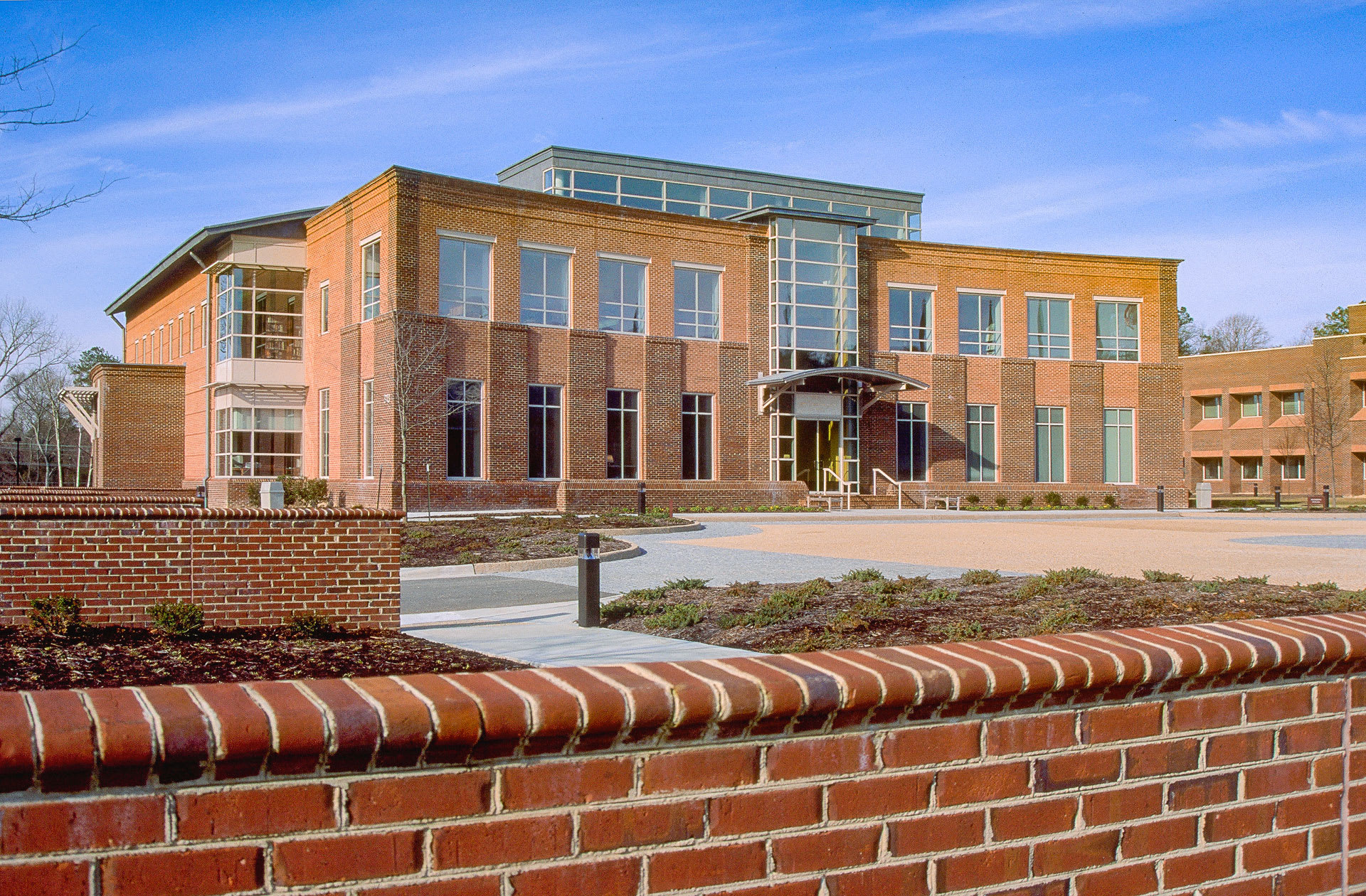
Gowan Pamphlet
A Biographical Sketch of Gowan Pamphlet
by Linda H. Rowe
Gowan Pamphlet answered a call that set him on a path few would have imagined
possible for an enslaved person in the colonial Chesapeake. Enmeshed in the
slave society of eighteenth-century Virginia, this man was hemmed in by law
and custom, by his owners’ demands, and by fear and prejudice harbored
by slaveholding and non-slaveholding Virginians alike.
When Gowan began his preaching mission in the 1770s, he was the property of
Mrs. Jane Vobe, owner of the King’s Arms Tavern in Williamsburg.
1 Some of the widow Vobe’s slaves, Gowan possibly among them,
learned to read the Bible and took part in formal Church of England services
at Bruton Parish Church.2 Under Vobe’s watchful eye, Gowan
and his fellow tavern workers (enslaved and free) also became skilled in the
manners, etiquette, and services that genteel diners and travelers
expected.3 Before the Revolution, Vobe catered to the likes of William
Byrd III, Sir Peyton Skipwith, and George Washington. On the eve of the siege at
Yorktown in 1781, Continental officers stationed in Williamsburg including Gen.
Thomas Nelson, Jr. and Baron von Steuben had accounts with Vobe for lodgings
and meals.4 To pursue his calling, Pamphlet had to negotiate with
his mistress for time away from his duties at her busy tavern.
Gowan Pamphlet stepped in when Moses, an itinerant black preacher, moved
on.5 Both men had responded to the “good news” abroad
in Virginia in the 1760s and 1770s spread by evangelical Presbyterians,
Baptists, and Methodists. The message of equality before God was on the
lips of black preachers and in the hearts of many black Virginians.6 Always
quick to associate slave religion with rebellion, local authorities ordered
Moses whipped under Virginia laws that authorized slave patrols for breaking
up slave gatherings and up to thirty-nine lashes for anyone caught meeting
clandestinely with slaves.7
Oral tradition suggests that Pamphlet like his predecessor, Moses, carried
on his early ministry out of sight of slave owners and patrollers in arbors
made of saplings and underbrush on Green Spring Plantation several miles from
Williamsburg. Black people flocked to hear Gowan preach and to be baptized
under his hand. His popularity among the enslaved population may have been
what prompted assaults on his reputation as well as his calling.8 In
July 1779 a white resident of Yorktown used the pages of the Virginia
Gazette to accuse Vobe’s slave of theft.9 And,
in spite of the good will thought to have existed among early black and white
Baptist converts in Virginia, a regional Baptist umbrella organization temporarily
excluded Pamphlet from the Baptist fold having decided that “no person
of color should be allowed to preach.” Undaunted, Pamphlet and his followers
continued to meet and grew in number.10 By
1781 the congregation counted two hundred members and may have begun gathering
for worship on the outskirts of Williamsburg in a wooded area known as Raccoon
Chase south of Jamestown Road.11
After the capital of Virginia moved to Richmond in 1780, Gowan and the rest
of Jane Vobe’s tavern staff continued to live and work in Williamsburg.
By 1786 a dwindling residential population and fewer visitors in the former
capital prompted Vobe to move her tavern operations to Chesterfield County
across the river from Richmond.12 Pamphlet came back to
Williamsburg in 1791 with his new owner, David Miller, executor
of Vobe’s estate.13 With his congregation numbering around
500, the visionary pastor judged the time
was ripe to apply for membership in the white-run Dover Baptist Association—a
regional organization descended from the very group that earlier tried to
silence him.14
To that end, Pamphlet—still a slave and probably with a pass from Miller
in his pocket—traveled north across the York River to Mathews County
to attend the annual meeting of the Dover Association in October 1791.15 Near
the end of the two-year inspection period for candidate churches, events near
Pamphlet’s home base could have derailed the application and brought
down the law on Pamphlet himself. In August 1793, William Nelson, Jr. claimed
that “the black preacher Gawin” inadvertently dropped a letter
in the street in Yorktown on his way to Norfolk. The letter’s shocking
contents persuaded Nelson that Pamphlet was a messenger for a network of armed
slaves from Richmond to Charleston, South Carolina. Pamphlet laid low for
several weeks, and the trouble somehow blew over.16
In September 1793 within a month of the talk of conspiracy involving his slave,
David Miller drew up a deed that would set Pamphlet free.17 In
October, Pamphlet attended the annual meeting in Middlesex County to hear
the Dover Association announce that the “Baptist church of black people
at Williamsburg” was received into membership.18 In
December 1793 York County officials did not bat an eye when they ordered Miller’s
deed copied into the public record.19
Perhaps in his mid-forties or early fifties, free man Pamphlet owned part of a lot
in Williamsburg and fourteen acres in James City County just two miles west
of downtown.20 Late in Pamphlet’s ministry, Jesse Coles
invited the congregation of black
Baptists to hold services in Williamsburg proper in a wooden carriage house
on Nassau Street.21 In 1805 white resident James Semple reported with
unease that “On Sundays & Holidays
the number of Free negroes & Mulattoes as well as slaves that is seen
in the City is truly astonishing.”22 Pamphlet
continued as pastor of the black Baptist church until his death in 1807 or
1808.23 White Baptists did not organize a church in Williamsburg
until 1828.24
Pamphlet very likely chose his surname himself.25 No
evidence for his family connections has come to light, but free black Benjamin
White, Sr. administered his estate.26 From
under Pamphlet’s wing emerged a new generation of pastors. Free blacks
Israel Camp (Kemp), Benjamin White, Jr., John Dipper, and John Alvis picked
up the reins after Pamphlet’s death.27 Literate
church members kept a church book (now lost), possibly a record of baptisms,
ordinations, congregational meetings, and preaching trips as far away as
Lynchburg.28 The African Church, as it was known in the late 1820s,
was tested in the ante-bellum period: closed for a year after the 1831 Nat
Turner rebellion in Southampton County, badly damaged by a tornado in 1834,
and forced to accept “reorganization” in 1843 with its own
black preachers subordinate to white ministers.29 But
the congregation also took possession of a new brick church dedicated in 1856
that stood on Nassau Street for over a hundred years.30
Returned to black leadership after the Civil War, the historic congregation took the
name First Baptist Church.31 Newly freed citizens of the United
States in the Williamsburg area turned to this distinguished African American
church for spiritual, civic, and educational
support, and during Reconstruction, the Rev. John M. Dawson won election to
the Virginia General Assembly and served in the Williamsburg city
government.32
First Baptist Church moved to its current location on Scotland Street in 1957.
The congregation honors the memory of its founder Gowan Pamphlet to this day.
Endnotes
1
Virginia Gazette (John Clarkson), July 3, 1779, p. 3, col. 2.
2
John C. Van Horne, Religious Philanthropy and Colonial Slavery: The Correspondence
of the Associates of Dr. Bray, 1717–1777, (Urbana, 1985), pp. 242, 278.
3
Patricia A. Gibbs, “Taverns in Tidewater Virginia, 1700–1774”
(master’s thesis: College of William and Mary, 1968). Gibbs’s thesis
covers the personnel and wide variety of services available at colonial taverns.
4
Mary A. Stephenson, “King’s Arms Tavern Historical Report, Block 9,
Building 29A & B , Lot 23,” Colonial Williamsburg Foundation Library
Research Report Series–1149, John D. Rockefeller, Jr. Library, 1949
(1990), pp. 6–9.
5
Robert B. Semple, A History of the Rise and Progress of the Baptists in
Virginia [1810]. Revised and extended by Rev. G. W. Beale (Richmond,
Va., 1894), p. 148.
6
Sylvia R. Frey and Betty Wood, Come Shouting to Zion: African American
Protestantism In the American South and British Caribbean to 1830, (Chapel
Hill, 1998), p. 101; Mecal Sobel, Trabelin’ On: The Slave Journey
to an Afro-Baptist Faith, paperback ed. (Princeton, 1988), p. 88;
Albert J. Raboteau, Slave Religion: "The Invisible Institution" in
the Antebellum South (New York, 1978), pp. 131–4; Carter
G. Woodson, History of the Negro Church (Washington, D.C.,
1945), p. 61.
7
William Waller Hening, Statutes at Large . . . (Richmond, 1810–1823)
5: 19, 24; 6: 108–9; That W. Tate, The Negro in Eighteenth-Century
Williamsburg (Williamsburg, Va., 1965), p. 112; Gayraud S. Wilmore, Black
Religion and Black Radicalism: An Interpretation of the Religious History
of the Afro-American People, 2nd edition (Maryknoll, N.Y.,
1983), pp. 30–32.
8
Semple, p. 148.
9
Virginia Gazette (John Clarkson), July 3, 1779, p. 3, col. 2.
10
Garnett Ryland, The Baptists of Virginia, 1699–1926 (Richmond,
1955), p. 121; Semple, pp. 118, 148.
11
John Asplund, The Universal Register of the Baptist Denomination in North
America for the Years 1790, 1791, 1792, 1793, and part of 1794 (Boston,
1794).
12
Chesterfield County Personal Property Tax Lists; Williamsburg Personal Property
Tax Lists, 1783–1861, microfilm M-1.47, Rockefeller Library Special
Collections, CWF.
13
“David Miller, Acting Ex’or” advertised the personal estate of
Mrs. Jane Vobe, deceased. Virginia Independent Chronicle and General
Advertiser, June 24, 1789. Miller married Ann Craig, daughter of
James Craig of Williamsburg, York County, Wills and Inventories (23),
p. 401.
14
Semple, pp. 126, 148; Dover Baptist Association Minutes, 1793.
15
Semple, p. 148. The author, Rev. Robert Semple, early nineteenth-century Baptist
historian, attended several annual meetings of the Dover Association
that Pamphlet attended.
16
Winston D. Babb, “French Refugees from Saint-Domingue to the Southern
States: 1791–1810” (Ph.D. diss.: University of Virginia,
1954). Thanks to Michael L. Nicholls for this reference.
17
York County, Virginia, Deed Book 7 (1791–1809), p. 92.
18
Dover Baptist Association Minutes, 1793.
19
York County, Virginia, Deed Book 7 (1791–1809), p. 92.
20
James City County Land Tax, 1805–1835, microfilm M–1.56, Rockefeller
Library Special Collections, CWF; Williamsburg Land Tax Lists, 1805–1806,
microfilm M–1.48.
21
A deed for the transfer of a building and Lot M on Nassau Street from Jesse
Coles [Jr.] to First Baptist Church is not extant, but there is evidence
that a deed was executed and recorded: In 1818, Williamsburg land tax
records used “the Baptist meeting house” as the southern
boundary of the Bryan House lot (faces Duke of Gloucester Street at
he corner of Nassau Street, Block 14, lot 351 ), M–1.48; In 1844,
a letter from nineteenth-century (white) Baptist minister Scervant Jones
about a controversy within the Dover Baptist Association over methods
of baptism (involving the African Baptist and the minister at Bruton
Parish Church) was published in a Baptist periodical. Jones noted
that “their house of worship [African Baptist church in Williamsburg],
(in itself of no value, but prized on account of it having been theirs by deed,
and that of record,) is now forcibly withheld from them. As to the matter
about the House, the moral sense of this intelligent community will
settle that. The good citizens of this ancient metropolis will
not suffer the poor colored Baptists to have their house of worship
forcibly taken from them.” Religious Herald, August 8,
1844, p. 127, col. 2; In the 1940s, a member of the Coles family remembered
that “he [Jesse Coles] gave the land and the building to the
church ‘to have and to hold as long as it was used for a church by
the congregation.’ Mr. Coles before he died [1845] gave the land and
building to the congregation outright. The records of this transaction were
destroyed when the courthouse at Williamsburg was burned [1912].” William
Eurenstoff Gardner, “A Historical Survey of the First Baptist Church
at Williamsburg, Virginia” (B.D. thesis: Virginia Union University,
1949), pp. 24–25. Gardner was pastor of First Baptist for several years
beginning in 1946. The principal value of Gardner’s thesis is excerpts
from a remarkable series of interviews he conducted with members of First Baptist
Church and the Coles family in the 1940s.
22
James Semple to Archibald McRea, May 27, 1805, Executive Papers 134, 21–31
May 1805, Library of Virginia, as quoted in Michael L. Nicholls, “Aspects
of the African American Experience in Eighteenth-Century Williamsburg
and Norfolk (Williamsburg, Va., 1990), p. 101.
23
1806 was the last year Pamphlet’s partial lot in Williamsburg was listed
in Williamsburg land tax records; Williamsburg Land Tax Lists, 1806,
microfilm M–1.48. 1807 was the last year Pamphlet attended the
Dover Baptist Association annual meeting. Dover Baptist Association
Minutes, 1807; Pamphlet’s estate held the fourteen acres in James
City County from 1813–1835. James City County Land Tax, 1813–1835,
microfilm M–1.56.
24
Zion Baptist (white), now Williamsburg Baptist Church, was said to
be “newly constituted” in the Dover Baptist Association Minutes,
1830.
25
To date, Gowan Pamphlet is the only person with the surname “Pamphlet”
discovered in local records from the eighteenth and nineteenth centuries. Only
once was the name spelled differently, as “Pamphet,” by
the eighteenth-century clerk who recorded Miller’s deed manumitting
the preacher. However, the deed is listed in the index contemporary
with that court book under the spelling “Pamphlet.” York
County Deed Book 7 (1791–1809) index and p. 92.
26
Pamphlet listed one free male tithable (himself) in his household in the 1805.
Pamphlet listed himself and one horse for tax purposes in 1806. James
City County Personal Property Tax List, 1805–1806, microfilm M–1.53.
Pamphlet died about 1807, but his estate held the fourteen acres in
James City County until 1835 when White sold the parcel to Moses Moore,
another pastor at the African Church in Williamsburg. James City County
Land Tax Lists, 1813–1835, microfilm M–1.56 & M–1.57;
Dover Baptist Association Minutes, 1834.
27
Dover Baptist Association Minutes, 1797–1812, 1819–1822, 1825–1833.
Virginia Baptist Historical Society; Israel Kemp registration, August
20, 1810, No. [47 or 48] and John Alvis registrations, October 15, 1804,
November 20, 1810, October 20, 1817, Nos. 27, 58, 101. York County,
Virginia, Free Black Register 1798–1831.
28
Semple, p. 148; John Dipper to Polly Dipper, November 24, 1829, John Dipper
Papers, Folder III, Papers 1826–1830, Item 14. New Jersey Historical
Society. Xeroxed copy in Special Collections, John D. Rockefeller, Jr.
Library, Colonial Williamsburg Foundation.
29
Dover Baptist Association Minutes, 1828, 1832, 1843, 1848; The American
Beacon and Norfolk and Portsmouth Daily Advertiser, v. 38, Norfolk,
Va., June 23, 1834, np [third page of issue].
30
Dedication, Sunday, May 11, 1856. Virginia Gazette, Williamsburg, Va.,
May 15, 1856, p. 2, col. 2.
31
First Baptist Church of Williamsburg, Virginia records, 1865–1950,
M–2103.1 & 2, Rockefeller Library Special Collections, CWF.
32
Dawson served in the Senate of Virginia from 1874–1877 for the district
composed of Charles City, James City, York, Warwick, and Elizabeth City
counties. Virginia. General Assembly. Register of the General Assembly
of Virginia 1776–1918 and of the Constitutional Conventions,compiled
by Earl G. Swem and John W. Williams, (Richmond, 1918), pp. 196, 198,
200, 367.
Linda Rowe is a historian in the Department of Historical
Research. This short biography of Gowan Pamphlet is based on the author’s
research in county records, newspapers, private papers, meeting minutes,
and related published works.
|